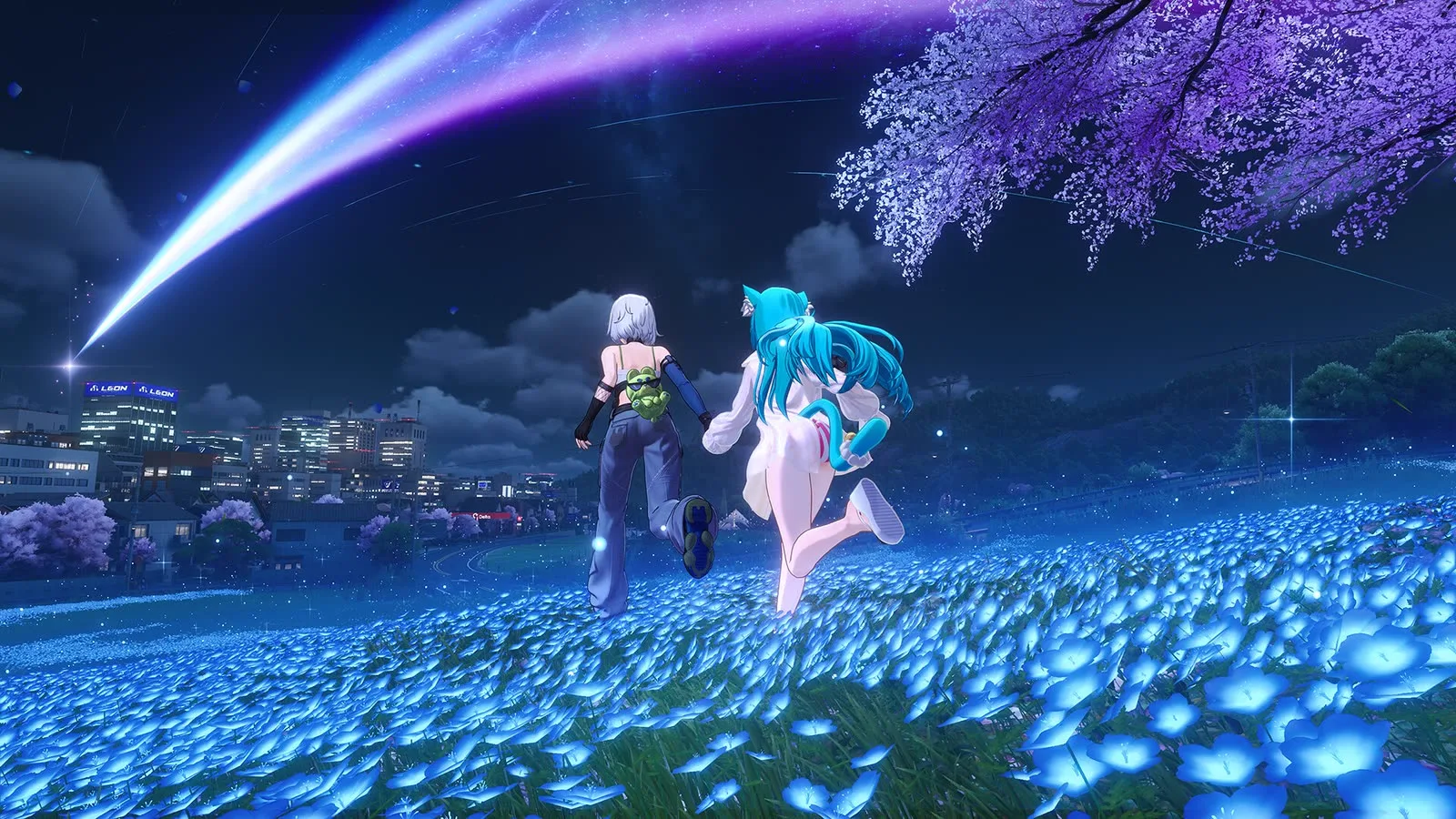
Wuthering Waves — the open world built around Echoes, not chores
Kuro Games' answer to Genshin swaps elemental combos for stolen enemy skills. What Echoes actually do, how combat differs from the genre standard, and how to start free on PC.

 Free to Play · Wuthering WavesPlay Wuthering Waves free on PC▶ Enter the World
Wuthering Waves, from Kuro Games, starts from the same premise as the genre's biggest name — free open world, gacha characters, elemental combat — and then spends its whole runtime trying to out-move it. This hub covers what actually sets it apart and how its core systems work.
In this guide:
- Echoes: your skill tree is other people's monsters
- Combat: swap-canceling and real timing
- Traversal that never asks you to stop
- The Tidal Continent as a setting
- Building a Resonator team
- Elemental identity without a lookup table
- Exploration rewards worth actually chasing
- The gacha side, honestly
- Getting started
- Who it's for
Echoes: your skill tree is other people's monsters
Defeat an enemy and you can absorb an Echo — a skill drawn from that creature, slotted onto any Resonator on your team. Building a squad isn't just picking characters; it's deciding which stolen abilities they carry, which turns team comp into a genuine puzzle instead of a tier-list lookup. Two players running the same three Resonators can field meaningfully different teams once Echo choices diverge.
Free to Play · Wuthering WavesPlay Wuthering Waves free on PC▶ Enter the WorldCombat: swap-canceling and real timing
The combat system rewards canceling a slower attack animation into a character swap rather than waiting it out — a technique the game teaches early but keeps rewarding at every difficulty level after. Dodging at the right instant grants a brief window for a free counter-attack, similar in spirit to Genshin's parry-adjacent mechanics but with a noticeably tighter timing window, which is exactly the 'asks more of you' reputation the game has built.
Traversal that never asks you to stop
Climb, glide and surf across water without a stamina bar breaking the flow — the Tidal Continent is built so movement itself is part of the combat rhythm, not just the way you get to it. Swapping between Resonators mid-combo keeps fights from ever feeling like you're waiting your turn, and the same fluidity carries into simply getting around the map.
The Tidal Continent as a setting
The world's central premise — a cataclysm called the Lament that reshaped the land — gives the environment design a genuine reason for its dramatic, storm-battered look rather than atmosphere for its own sake. Regions carry visible scars from that event, and the environmental storytelling rewards players who actually stop to look rather than treating the map as a corridor between quest markers.
Building a Resonator team
A team generally wants a clear win condition — one Resonator built to deal the bulk of damage, with the other two supporting that plan through Echo-granted utility, elemental setup or defensive cover. Building three separate damage-focused Resonators with no coordination tends to underperform a coherent three-piece team, the same lesson most gacha action-RPGs teach eventually.
Elemental identity without a lookup table
Elemental interactions exist but are lighter-touch than Genshin's explicit reaction chart, favoring fluid combo execution over memorizing which element triggers which named reaction. That's a deliberate design choice: it keeps the emphasis on real-time execution rather than pausing mid-fight to recall a reaction table, which is part of why the game reads as faster-paced even when the underlying systems share DNA with its genre peers.
- Echo system turns team-building into a real puzzle, not a tier list.
- Fluid mid-combo character swapping with tight parry timing.
- Traversal (climb/glide/surf) with no interruptions.
- Free-to-play on Windows PC.
The combat is the pitch here — if Genshin's pace ever felt gentle to you, this is the sharper version of the same idea.
— Yuki Tanaka
Exploration rewards worth actually chasing
The Tidal Continent hides a fair amount of its best material off the beaten path — puzzle chests, hidden Echoes and small environmental stories that never show up on a quest marker. Unlike open worlds that pad their map with repetitive filler, exploring here tends to pay off with something that actually improves your team: a rare Echo, a useful crafting material, or a piece of world lore that recontextualizes something you saw hours earlier. It rewards curiosity in a way that feels earned rather than obligatory.
The gacha side, honestly
Like its genre peers, new Resonators and weapons come through a gacha system, and it's worth being upfront about that before you commit. The good news is that the free-to-play path is genuinely playable — a well-built team of starting and early-gacha Resonators can clear most content, and Echo quality matters at least as much as which characters you happen to own. Spending accelerates things; it doesn't gate them the way some genre entries do.
Getting started
Spend your first real session practicing swap-cancels in a low-stakes fight before pushing into harder content — the technique is the foundation everything later depends on, the same way NTE's dodge-timing is foundational there. Don't ignore Echo farming early; a well-chosen Echo on your starting Resonators does more for your combat effectiveness than most early character pulls.
Who it's for
If you want the open-world-gacha structure but wish the combat asked more of you, this is the one built for that itch. Fans of Genshin Impact and Zenless Zone Zero will feel at home immediately, and the faster combat pace may well end up being the deciding factor between the three.
Kuro Games has kept a steady content cadence since launch, adding new regions and Resonators on a schedule that gives returning players something new fairly regularly rather than leaving the map to feel finished and static.
Whether the sharper combat pace suits you is honestly easier to feel than to describe — a single boss fight tells you more than any amount of reading, so treat the first hour as the real pitch rather than this guide.
It costs nothing to find out, and the opening region alone is enough to know whether the storm-lit Tidal Continent is a world worth sticking around in.