Sea of Conquest: the strategy game where your base has a rudder
Most games in this genre give you a town that cannot move. This one gives you a ship you build deck by deck and then sail into someone else's trade route. What that changes, and what it does not.
Contains sponsored links. We may earn a commission if you install a game, at no cost to you.
 Free to Play · Sea of ConquestPlay Sea of Conquest free on PC▶ Build & Conquer
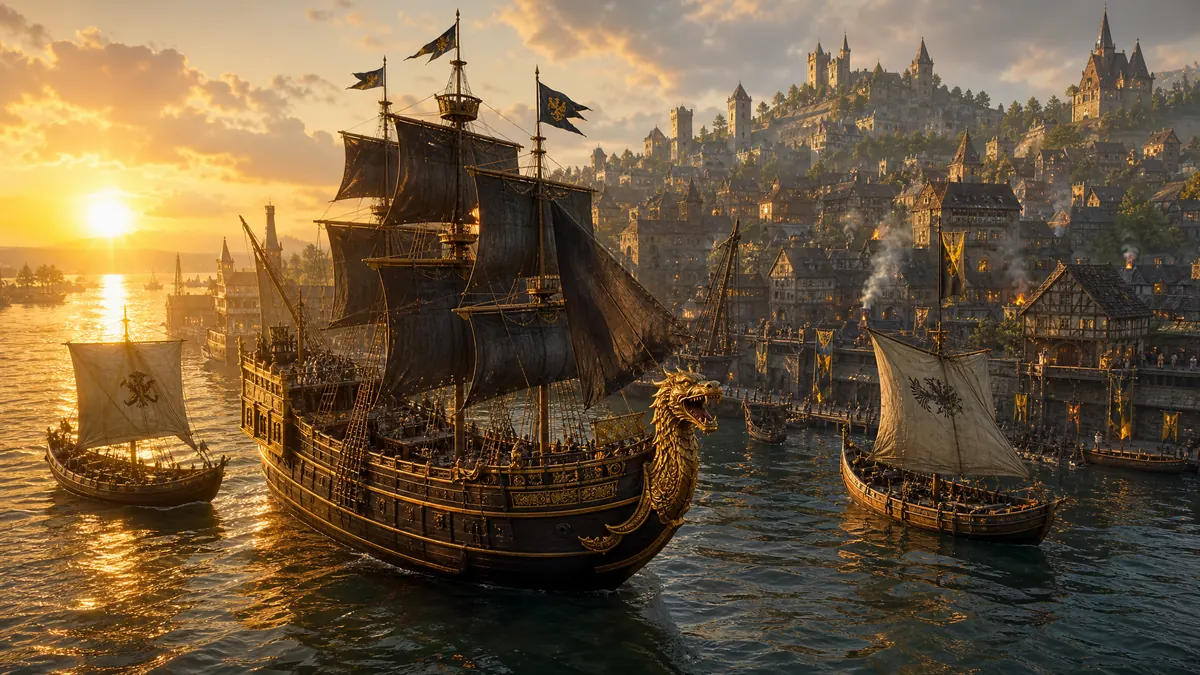
Strategy games of this shape almost always hand you a fixed settlement. You build it, you defend it, and the map happens around it. Sea of Conquest makes one structural change to that formula, and it is the reason the game is worth a look: your base is a ship, and it moves.
In this guide:
The ship is the base
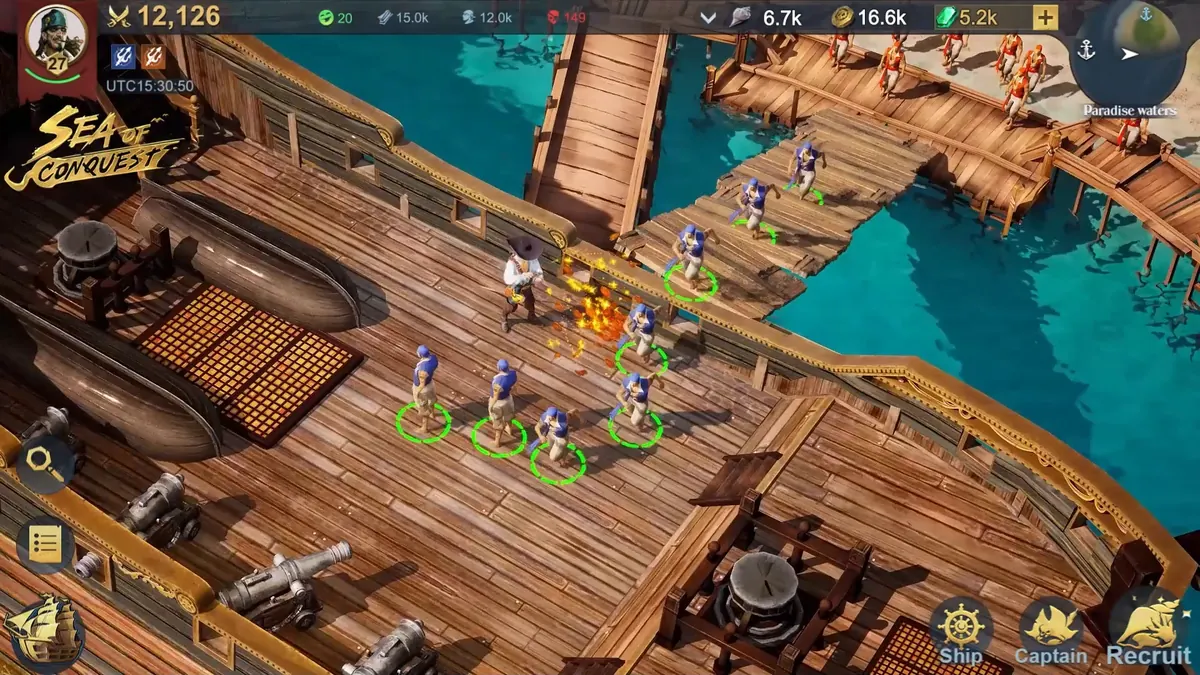
You lay out decks the way you would lay out a settlement (production, quarters, gunnery) and each one needs crew assigned to it to actually do anything. The layout is a real decision rather than decoration: what you build determines what your ship can sustain at sea and how it performs when something shoots back.
The consequence is that your investment is never something you leave behind to go raiding. It sails with you. That cuts both ways, and it is the tension the whole game runs on.
Crew: specialists, not stat sticks
Crew members assigned to a deck aren't interchangeable bodies. Each brings a specialty that changes what that deck actually does, and a gunnery deck crewed by a trade specialist underperforms one crewed correctly. Reading what a crew member is actually good at before assigning them, rather than filling slots to keep numbers up, is the habit that separates an efficient ship from a full one.
Free to Play · Sea of ConquestPlay Sea of Conquest free on PC▶ Build & ConquerCombat is positioning, not reflexes
Naval fights here are about broadsides and angles rather than execution. You are managing where your guns are pointed, which crew abilities are ready, and whether the trade you are about to take is one you can afford. If you came looking for an action game, this is not it, and the game is honest about that within the first hour.
- Crew are specialists, not stat sticks, who you assign where changes what the ship can do.
- Positioning decides most engagements before the damage numbers do.
- Losing a fight costs you something you built, which is the point.
Do not over-invest in guns early. A ship that can stay at sea longer wins more territory than a ship that wins more duels.
Marcus Webb
Trading, raiding and the risk of moving your base
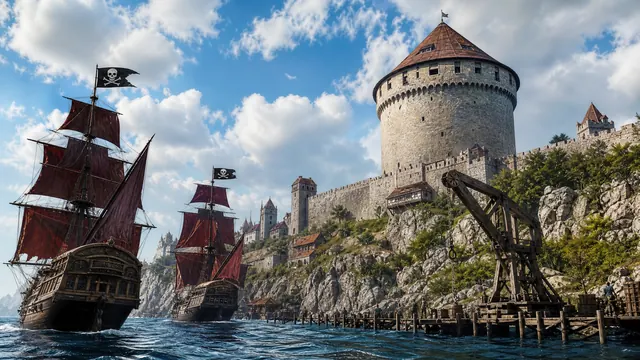
Because the ship carries everything you've built, every trade run or raid is also an exposure decision. Sailing into contested water with an undefended cargo hold risks the same investment you'd otherwise be protecting at home in a fixed-base strategy game. That risk is deliberate: it's what keeps the map dangerous rather than a static resource-collection loop.
The long game is alliance politics
Solo play gets you through the opening. After that the map is about routes, who controls them, who is allowed to use them, and what an alliance will do to keep them. That is where the hours go, and whether it appeals is the honest test of whether this game is for you.
If negotiating with strangers about shipping lanes sounds like a chore rather than a game, be aware that it is the endgame, not a side activity.
Upgrading the ship without overreaching
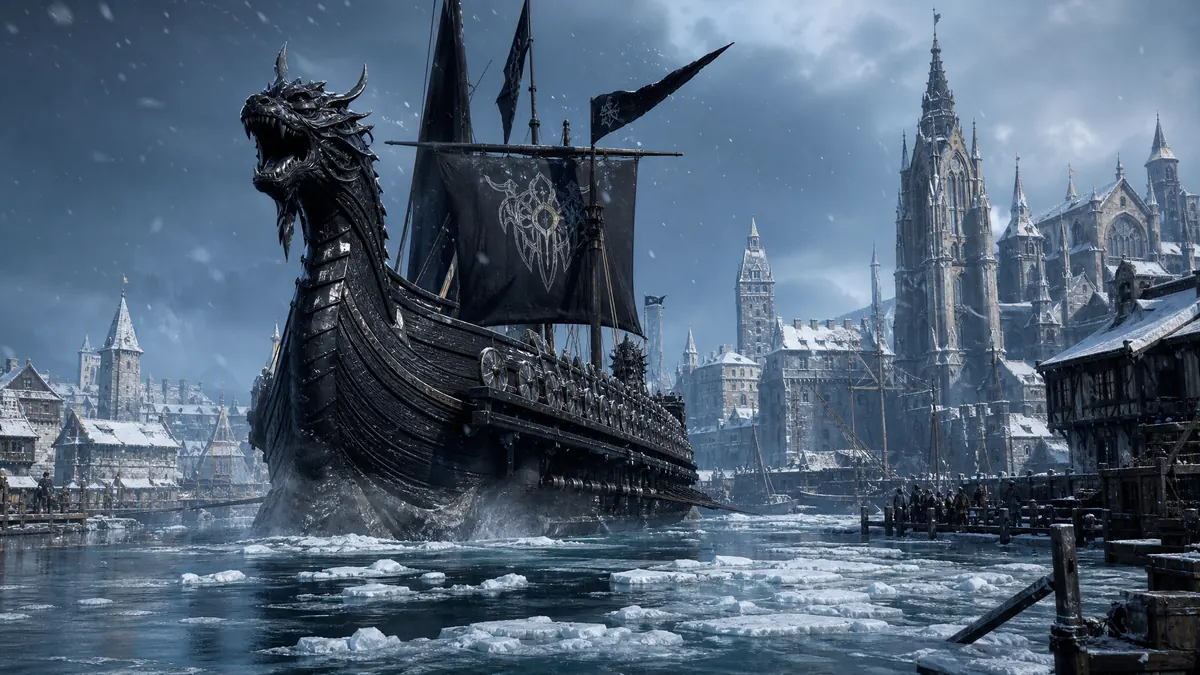
Because your ship is both your economy and your combat platform, every upgrade decision is a tradeoff with no separate 'safe' resource to fall back on. Putting everything into gunnery leaves your production decks thin, and putting everything into production leaves you unable to defend what you've built. The players who progress fastest tend to upgrade in a balanced sequence rather than maxing one deck type before touching another, since an overspecialized ship is vulnerable to exactly the kind of encounter it wasn't built for.
- Balance gunnery and production upgrades rather than rushing either to its cap.
- A ship that can outrun a bad fight is often more valuable than one that can win a fight it shouldn't have entered.
- Reinforce quarters and crew capacity before you need the extra hands, not after.
Early mistakes worth avoiding
New captains commonly sail too far from safe waters before their ship can defend the investment it carries. A promising trade run through contested territory can erase weeks of progress in one bad encounter. It's also common to under-invest in crew specialization early, treating crew as interchangeable bodies rather than reading what each one is actually good at, which quietly caps a ship's performance long before its deck layout does. Both mistakes are easy to avoid once you know to look for them, and both are expensive to unlearn the hard way.
Who it is for
- Strategy players who want their base to be a piece on the board rather than a menu.
- Anyone who likes alliance-scale politics more than solo optimisation.
- Pirate-fiction readers who want the fantasy attached to an actual strategic layer.
The same instincts carry over to Rise of Kingdoms and Star Trek Fleet Command. Alliance warfare on a shared map, different centuries.
Free on Windows PC. The first week tells you whether the ship-building loop holds you.
What separates this from the wider genre isn't the map or the resources. It's the single structural choice that your base can be lost at sea. That's a different kind of tension than a strategy game where the worst case is a besieged city, and it's worth trying purely to see how that tension actually plays out in practice.
New captains shouldn't feel rushed to specialize immediately either. A few sessions spent simply sailing and observing how other ships behave around you teaches more about the actual state of your server than any single guide can.