Rise of Kingdoms: the complete strategy-MMO guide
Build a civilization, forge alliances and wage real-time war. What Rise of Kingdoms is and how to start free on PC.

 Free to Play · Rise of KingdomsPlay Rise of Kingdoms free on PC▶ Rule the Map — Free
Rise of Kingdoms, from Lilith Games, is a real-time strategy MMO where you build a civilization from a single city and grow it into an empire. This hub covers the core loop, the systems underneath it, and why the alliance meta is the real game.
In this guide:
- Diplomacy is the meta
- Choosing a civilization
- Commanders and how they change the game
- Pairing commanders for specific jobs
- The seamless world map
- Alliance warfare and territory
- Kingdom age and cross-server play
- Barbarians and early solo progress
- The governor's profile and long-term identity
- Getting started
- Who it's for
Diplomacy is the meta
Choose a historical civilization, recruit commanders, and expand on a seamless world map. The battles matter, but the long game is diplomacy. The alliances you build decide who rules the map far more than any single army does. A strong solo player without allies still loses to a coordinated alliance of weaker players, which is the whole point of the genre when it's done well.
Choosing a civilization
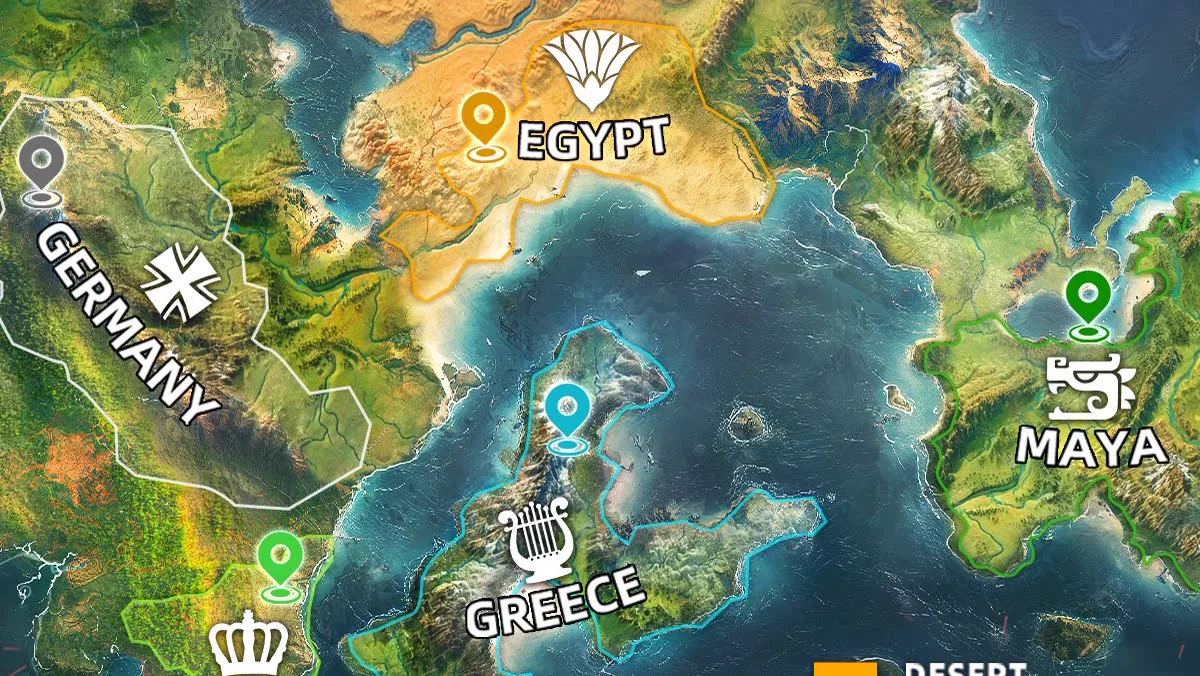
Each historical civilization carries its own passive bonuses and unique unit. China leans into governance and internal growth, for instance, while other civilizations lean harder into early military aggression or economic output. The choice shapes your early strategy meaningfully, though it isn't a permanent trap: what matters more long-term is how well you play the civilization you picked.
 Free to Play · Rise of KingdomsPlay Rise of Kingdoms free on PC▶ Rule the Map — Free
Commanders and how they change the game
Legendary commanders based on real historical and mythological figures each bring distinct skill trees, and pairing two commanders well matters more than picking whoever has the highest headline power. Some pairs are built for city defense, others for open-field battles, others for gathering resources efficiently. Knowing which commander pair suits which job is a real skill that separates strong players from ones just chasing power numbers.
Pairing commanders for specific jobs
The commander system rewards thinking in terms of roles rather than raw stats. A primary commander built for damage paired with a secondary built for utility often outperforms two damage-focused commanders stacked together, since the skill synergies between complementary kits compound in ways flat power numbers don't capture. New players who chase the highest-rated single commander instead of a coherent pair tend to underperform players with lower-rated but better-matched combinations.
The seamless world map
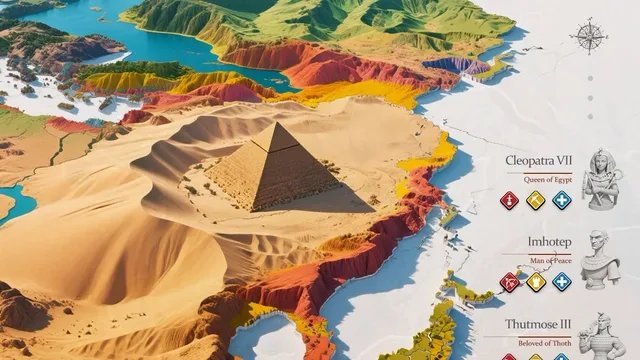
Unlike server-instanced strategy games, the map here is one continuous, persistent world shared with everyone on your server. What you build stays where you built it, and the geography around you (barbarian camps, resource nodes, rival cities) is the same map everyone else is looking at, not a private instance.
Alliance warfare and territory
Alliances coordinate everything from shared defense to territory-flag wars over key map regions, and the strongest alliances function almost like a second layer of the game on top of individual city management. Joining an active, well-organized alliance early changes the entire trajectory of a playthrough. Solo players hit a wall that alliance members simply don't.
Kingdom age and cross-server play
Kingdoms progress through defined ages that eventually open cross-kingdom warfare against other servers' populations. Worth knowing before you commit heavily to a specific kingdom, since the competitive landscape shifts substantially once cross-server conflict becomes available. A newer kingdom generally offers a gentler on-ramp than joining a long-established one mid-cycle.
Barbarians and early solo progress
Before alliance warfare becomes the focus, barbarian camps and forts scattered across the map give new governors a way to grow commanders, farm resources and practice combat without risking a fight against another player's city. Clearing progressively tougher barbarian content is the honest way to build up commander experience early, and it teaches the same troop-composition fundamentals that later matter in real alliance conflicts. Just without the stakes of losing troops to a rival kingdom.
The governor's profile and long-term identity
Beyond city and commander development, your governor profile tracks a broader identity across skill trees. Civil, growth, and conquest paths that shape long-term playstyle beyond any single city's build order. Committing to a coherent governor build rather than spreading skill points evenly pays off the same way commander pairing does: a governor built clearly around one strength outperforms one that's mediocre at everything.
Getting started
Prioritize joining an alliance in your first few days rather than playing solo while you 'get comfortable'. The protection and shared resources are worth far more early than the illusion of independence. Focus your first city's development on a clear early plan (economy or early military) rather than spreading resources evenly across everything at once.
Server age matters when picking where to start: a brand-new kingdom gives everyone a roughly even footing, while joining an established one mid-cycle means catching up to players with a real head start. Neither is wrong, but knowing which situation you're walking into sets your expectations correctly from day one.
Who it's for
- Real civilizations and legendary commanders.
- A seamless, live world map.
- Alliance diplomacy and large-scale war.
- Free-to-play on Windows PC.
If long-game strategy and alliance politics appeal to you, Rise of Kingdoms has one of the deepest metas around, and it's free to start.
Years of accumulated civilizations, commanders and events also mean a new governor today inherits a deep game rather than a thin launch-era version of it, which is worth knowing if your only reference point is an old screenshot or a friend's account from years ago.
Whichever civilization you start with, treat your first few days as a scouting phase for both the map and your own preferences. There's no rush to optimize before you actually understand what the game is asking of you.
The install is free, and a new kingdom launch is the single best time to try it. Everyone starts from roughly the same footing, and the early alliance politics that define the genre are at their most interesting before any one group has pulled ahead.